Building a Digital Future: How Senator Shuaib Afolabi Salisu Is Transforming Education in Ogun Central

In a century defined by innovation, technology, and the relentless pace of digital transformation, societies that fail to prepare their young people for the future risk being left behind. Across the world, education has become the most powerful currency of development, while digital literacy is now as essential as traditional literacy. In Ogun Central, one public servant appears to understand this reality with uncommon clarity: Senator Shuaib Afolabi Salisu, affectionately known as Omoyayi.
As the Senator representing Ogun Central Senatorial District and Chairman of the Senate Committee on ICT and Cyber Security, Senator Salisu has brought to public office a rare blend of vision, experience, and practical intervention. More importantly, he has demonstrated that effective representation is not merely about motions on the Senate floor or ceremonial appearances at public functions. It is about identifying the pressing needs of the people and responding with solutions that are timely, strategic, and transformative.
For Senator Salisu, education is not just a sector; it is the foundation upon which enduring progress must stand. His conviction is rooted in a philosophy that is both simple and profound: education is the one treasure that no one can steal. That belief, shaped by his own journey from humble beginnings in Odeda Local Government Area to the Nigerian Senate, now finds expression in a deliberate and far-reaching intervention across Ogun Central.


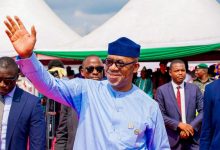

One of the clearest indications of this commitment is his investment in teacher development. After all, no educational system can rise above the quality of its teachers. Recognising his truth, Senator Salisu facilitated a landmark capacity-building programme in December 2025 at Moshood Abiola Polytechnic, Abeokuta, where over 200 teachers were trained in the use of ICT for teaching and learning. The initiative was initially designed for a much smaller number, but the overwhelming interest it generated reflected the strong desire among educators to acquire relevant digital skills for the modern classroom.
Beyond the training itself, the programme also celebrated excellence. Many teachers who had distinguished themselves as Best Teachers in Ogun State were rewarded with laptops and cash gifts—a symbolic but significant gesture that underscored the Senator’s respect for educators and his belief that excellence should never go unnoticed. It was therefore not surprising that the Ogun State Commissioner for Education, Professor Abayomi Arigbabu, commended the intervention as a notable contribution to the state’s educational advancement.
Yet Senator Salisu’s vision extends beyond teachers. He has also placed considerable emphasis on the youth, especially students and recent graduates who face the difficult challenge of navigating an economy increasingly driven by technology and innovation. Rather than leave them as mere consumers of digital content, he has sought to prepare them to become creators, entrepreneurs, and problem-solvers.
This commitment came alive in November 2025 through a three-day intensive programme on digital literacy and entrepreneurship for undergraduates and fresh graduates. Across different phases, more than 600 beneficiaries have participated in the initiative. In one of its most impactful cohorts, 200 students drawn from institutions such as the Federal University of Agriculture, Abeokuta (FUNAAB), Moshood Abiola Polytechnic, Obere, Olabisi Onabanjo University, Ibogun campus,
Adegbenro ICT polytechnic, Ewekoro, and the Federal College of Education, Osiele, received practical ICT training aimed at preparing them for the digital economy.
What made the programme even more remarkable was that each participant received a brand-new laptop and a cash grant of ₦50,000 to support the next phase of their personal development or entrepreneurial journey. Addressing the participants virtually from the African Forum on Cyber Security Summit in Kenya, Senator Salisu urged them to embrace technology not merely as a tool for survival, but as an instrument of leadership, innovation, and dignity.
Of course, digital education cannot thrive in an environment where the necessary infrastructure is absent. This is another area where Senator Salisu has shown impressive foresight. He understands that access to technology is not just about training individuals; it is also about creating spaces where technology can be learned, explored, and applied. That is why his interventions have included the rehabilitation, equipping, and construction of ICT centres across schools in Ogun Central.
Schools such as Nawairudeen Grammar School, Ijemo Titun High School, Asero High School, and Agbado District Comprehensive High School, Oke Aro, have benefited from the installation of modern ICT equipment. In addition, brand-new ICT centres have been facilitated at Government Science and Technical College, Olobe, and Community High School, Oluke, Ifo. The completion of the ICT centre at Oluke in late 2024 was especially significant, as it brought modern computing facilities closer to students in a community that might otherwise have remained on the margins of the digital revolution.
The Road to Knowledge: Rehabilitating the FUNAAB Access Road
But Senator Salisu’s intervention has not been confined to classrooms and laboratories. He has also shown that access to education is not only intellectual; it is physical. For years, the Camp–FUNAAB–Alabata Road remained a painful symbol of neglect, causing hardship for students, staff, and other road users connected to the Federal University of Agriculture, Abeokuta. The deplorable state of the road had become an everyday burden and a silent obstacle to learning.
By taking up the rehabilitation of that road, Senator Salisu addressed a challenge that was as practical as it was urgent. The ongoing work has already brought relief to thousands of commuters, while the university community has openly acknowledged and appreciated the intervention. At the 32nd Convocation Ceremony of FUNAAB, the institution formally applauded the Senator for championing the project, with the Pro-Chancellor, Oba Rasheed Olabomi, particularly commending his dedication to the university’s development.
A Holistic Approach: Environment, Artisans, and Agribusiness
What perhaps distinguishes Senator Salisu even further is that his understanding of education goes beyond the formal school system. He sees education as empowerment in its broadest sense—the transfer of knowledge, skills, and awareness that can transform lives and communities.
This broader vision is evident in his environmental sustainability initiative targeted at young women, designed to discourage the use of firewood for cooking. The intervention combines practical training with environmental consciousness, highlighting the dangers of deforestation, indoor pollution, and carbon emissions while promoting healthier and more sustainable alternatives.
It is equally evident in his support for artisans across Ogun Central, many of whom have been introduced to digital tools that can expand their businesses and improve their income. In teaching artisans how to leverage technology for marketing, networking, and business growth, the Senator is advancing a deeper philosophy of empowerment—not handouts, but capacity; not dependency, but productivity.
The same logic underpins his support for aquaculture development. With representatives selected from all 74 wards in Ogun Central for fish farming training, the initiative addresses both livelihood and food security. Beneficiaries not only acquired technical knowledge but also received inputs and financial support to scale up production. It is a model of intervention that links education directly to economic value.
Even the media has not been left out. In recognition of the vital role journalists play in informing society and sustaining democracy, Senator Salisu facilitated a 24-hour power supply and distributed laptops at the NUJ Secretariat, Iwe Iroyin. It was a thoughtful intervention, one that acknowledged that in the information age, those who tell society’s stories must also be equipped with the tools to do so efficiently.
Engaging Traditional Institutions
Another compelling dimension of his educational advocacy is his engagement with traditional institutions. At a capacity-building workshop for monarchs held at the Ake Palace, Senator Salisu challenged royal fathers to take an active role in improving secondary school enrolment through community engagement. It was a timely appeal. In an age marked by rising school dropout rates, value erosion, and the troubling spread of cybercrime among young people, traditional rulers still possess moral authority and grassroots influence that can be deployed in defence of education and social values.
His lament about the fading “Omoluabi” ethos was not merely rhetorical. It was a reminder that development is not only about infrastructure and gadgets, but also about character, discipline, and cultural renewal. In that sense, his educational interventions are not only modern in content but also moral in intent.
From the distribution of free textbooks, exercise books, and school bags to secondary schools across the district, to the establishment of ICT centres, teacher training, youth digital empowerment, road rehabilitation, artisan development, environmental education, and community advocacy, Senator Shuaib Afolabi Salisu has shown a model of representation that is thoughtful, integrated, and future-oriented.
In him, Ogun Central appears to have found not just a lawmaker, but a builder of human capital. By aligning his legislative role in ICT and Cyber Security with the developmental realities of his constituency, Senator Salisu is doing far more than executing projects. He is opening doors, widening horizons, and preparing a generation for the demands of a digital world.
At a time when many public interventions arere shallow and short-lived, his approach stands out for its substance and sustainability. He is not merely distributing items; he is distributing opportunity. He is not just responding to present needs; he is investing in the future.
And in that future, if the current momentum is sustained, Ogun Central may well emerge as a shining example of how visionary leadership can transform education into empowerment, and empowerment into lasting development.