Okubadejo Advocates Pragmatic Energy Transition at Commonwealth Summit, Positions Ogun as Model for Sustainable Growth
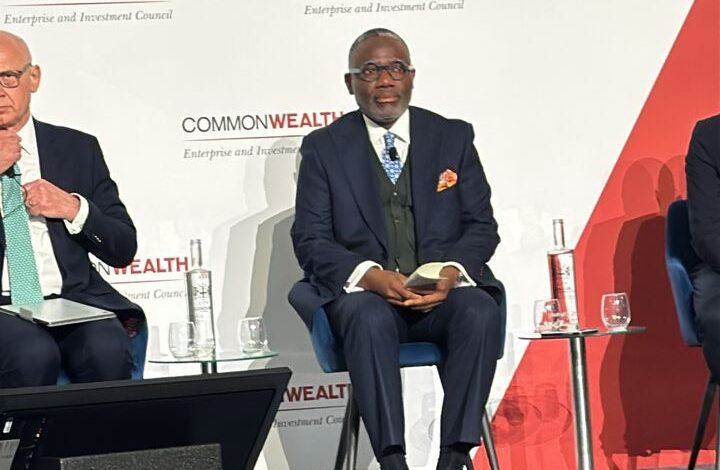
Hon. Dapo Okubadejo, Ogun State’s Commissioner for Finance and Chief Economic Adviser to Governor Dapo Abiodun, has called for a balanced and realistic approach to energy transition in developing economies, declaring that “you cannot decarbonize darkness.”
Speaking at the Commonwealth Trade and Investment Summit held in London, Okubadejo delivered a compelling address that drew attention to the urgent need for energy security as a foundation for sustainable development.
Addressing an audience of global policymakers, investors, and development experts, Okubadejo emphasized that while decarbonization remains a global priority, developing nations like Nigeria must first ensure reliable and accessible energy for their populations and industries.


His statement, “You cannot decarbonize darkness,” captured what many participants described as a core dilemma for emerging economies—how to pursue climate goals without undermining economic growth and industrialization.
Okubadejo outlined a dual-track strategy being implemented in Ogun State under the leadership of Governor Abiodun. According to him, the state is prioritizing energy security through investments in gas-powered infrastructure, while simultaneously advancing renewable energy initiatives such as solar and hydro power.
He explained that this approach reflects a broader understanding that decarbonization is not an immediate switch, but a gradual transition that must be guided by availability, accessibility, and affordability of energy.
“Nigeria is among the top countries globally in gas reserves, and we must leverage this as a transition fuel to support industrial growth and economic transformation,” Okubadejo stated.
He further highlighted ongoing efforts by the Ogun State Government, including the commissioning of gas turbine power plants, promotion of Compressed Natural Gas (CNG) for industrial use, and partnerships with renewable energy providers. These initiatives, he noted, are designed to ensure stable electricity supply while reducing long-term carbon emissions.
Okubadejo also pointed to the impact of recent reforms in Nigeria’s power sector, particularly the decentralization of electricity regulation, which now allows subnational governments to play a more active role in energy development.
According to him, Ogun State is already benefiting from this policy shift, with several Independent Power Producers (IPPs) established and additional projects in the pipeline. These developments are attracting private sector participation and strengthening the state’s position as a hub for industrial and economic activity.
Industry observers at the summit noted that Okubadejo’s presentation stood out for its clarity, depth, and practical orientation, describing it as a reflection of technocratic leadership within the Ogun State Government.
His emphasis on people-centered outcomes—ensuring that energy reforms translate into tangible improvements in daily life—was also highlighted as a key strength of the state’s approach.
Analysts say Ogun State’s model, which combines gas-based energy stability with a gradual shift to renewables, could serve as a template for other subnational governments across Africa seeking to balance development with environmental responsibility.
The Ogun State delegation’s participation at the summit underscores the administration’s commitment to positioning the state as a competitive destination for investment and innovation.
With its ongoing energy reforms and infrastructure investments, Ogun State continues to reinforce its reputation as the “Gateway State,” driving a vision of economic growth anchored on sustainable and inclusive development.