Experience, Exposure, and Diligence: The Legislative Impact of Rt Hon Olumide Osoba
In the theatre of Nigerian politics, there is no shortage of voices. The stands are filled with spectators who believe they could manage the game better than those on the field. They shout instructions, critique every move, and demand substitutions with the confidence of seasoned tacticians. But as the saying goes, hand someone the whistle, the pressure, and the responsibility for results, and the game suddenly looks very different.
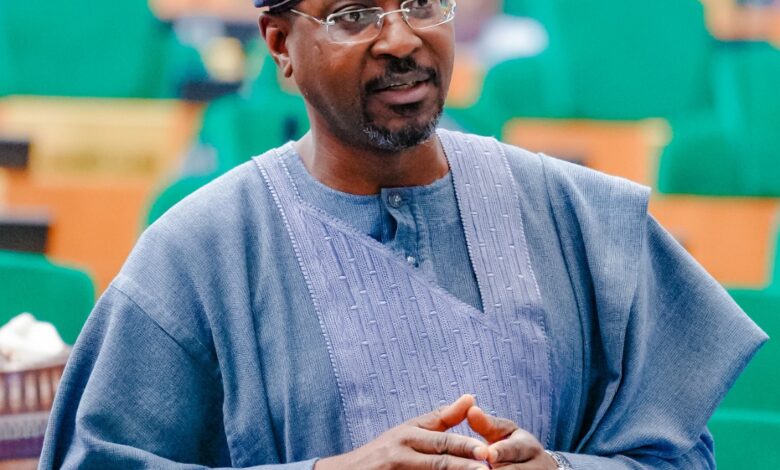
This is the distinction between commentary and governance—between armchair criticism and the weight of legislative responsibility. And it is precisely this distinction that defines the representation of Rt Hon Olumide Osoba, the member representing Abeokuta North, Obafemi-Owode, and Odeda Federal Constituency in the House of Representatives.
Before the green chamber, before the legislative responsibilities, there was a foundation carefully laid through years of exposure to governance and public service. Rt Hon Olumide Osoba did not arrive at the National Assembly as a political novice needing “four years to learn the ropes.” His pedigree is well-documented: he is the son of a veteran journalist and former Governor of Ogun State, Aremo Olusegun Osoba—a man whose own career in public service spans decades and whose name remains synonymous with principled leadership in the state.


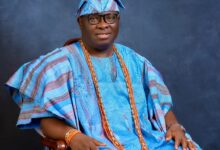

But Olumide Osoba has not ridden on coattails. Rather, he has built upon a legacy, leveraging the political education acquired from close observation of governance at its highest levels. Before his election, he demonstrated capacity in the private sector and displayed an understanding of the intersection between policy and development. When he stepped into the National Assembly, he stepped in prepared—not to learn, but to deliver.
The difference between a legislator focused on development and one focused on theatrics lies in the evidence. Since assuming office, Rt Hon Olumide Osoba has pursued a representation anchored not in press statements alone, but in projects that constituents can see, touch, and benefit from.
Infrastructure development has received significant attention under his watch. The construction of classroom blocks across various schools addresses the foundational need for quality education. The establishment of ultra-modern town halls provides communities with spaces for gathering, dialogue, and collective decision-making. Road interventions, particularly along the Oba Kobape axis, have eased transportation and improved connectivity for residents and businesses alike.
Understanding that darkness limits progress, he facilitated the distribution of 1,000 streetlights across all wards in the constituency, extending economic and social activities beyond daylight hours. Rural electrification received a boost through the provision of transformers, bringing power to communities long neglected.
In an era where digital skills determine economic participation, Rt Hon Olumide Osoba has equipped young people through well-resourced ICT rooms in schools, preparing students not just for examinations, but for a competitive global economy. A mini sports centre has also been established, recognising that talent development extends beyond the classroom into the field of athletics.
True representation goes beyond infrastructure to touch lives directly. The lawmaker’s regular empowerment programmes reflect an understanding that governance must be felt at the household level. From financial support for small business owners to agricultural workshops that teach modern farming techniques, the focus has been on creating sustainable livelihoods.
Youth training programmes in solar energy installation, automobile technology, and other vocational skills are preparing a generation of young people not to wait for government jobs, but to become employers of labour themselves. These are not handouts; they are investments in human capacity.
Even the youngest constituents have not been forgotten. At the beginning of every academic session and term, primary school pupils across the constituency receive school bags and educational materials. It is a small gesture with a significant message: that this representative cares about the future of every child, from their earliest steps into the classroom.
Beyond the constituency projects that earn headlines, there is the less visible but equally critical work of lawmaking. Rt Hon Olumide Osoba has distinguished himself on the floor of the House through contributions to debates, sponsorship of motions, and engagement with national issues that affect not only his constituents but the country at large.
His understanding of national politics—honed through years of exposure to governance and policy discourse—enables him to navigate the complexities of the legislative process effectively. He does not need orientation; he contributes. He does not need hand-holding; he leads.
Democracy accommodates dissent. It provides space for criticism, alternative views, and robust debate. But democracy also demands responsibility. It requires that those who critique offer credible alternatives. It expects that those who condemn have themselves attempted to construct.
Rt Hon Olumide Osoba has chosen construction over condemnation. While others fill the air with amplified rhetoric, he focuses on structured planning and deliberate action. While some content themselves with pointing out problems, he works quietly to provide solutions.
The future of Abeokuta North, Obafemi-Owode, and Odeda Federal Constituency cannot be built on noise alone. It requires experience that understands the terrain, exposure that comprehends the national context, and diligence that follows through on commitments. It requires leaders who, when handed the whistle, know how to manage the game—not from the stands, but from the field.
Rt Hon Olumide Osoba represents that calibre of leadership: prepared, purposeful, and proof that in the delicate balance between commentary and governance, results will always speak louder than words.


